

Coffee table only
Possible in a very compact living room, but ensure the rug is wide enough around the table. A tiny centered rectangle can fragment the room.


A well-chosen living room rug provides a common foundation for the sofa, armchairs, and coffee table. Its color matters, but size and placement often have an even greater impact on the result. Before comparing patterns, observe the width of your sofa, the depth of the seating area, the walkways to doors, and how you actually use the living room.
There is no mandatory format for a 15, 20, or 30 m² living room. Two rooms of the same surface area can contain a 190 cm straight sofa, a 300 cm sectional sofa, or two sofas facing each other. Furniture is therefore a better reference point than the room's square footage.
Measure the total width of the seating area: sofa, any armchairs, and side tables. Then look at the depth available up to the walkways. A living room rug can extend on each side of the sofa to avoid a cramped effect. It does not need to touch the walls: a strip of visible floor often helps to frame the area.
| Configuration | Recommended placement to test | Resulting effect |
|---|---|---|
| Small living room | Front legs of the sofa on the rug. | Connects furniture without covering the entire floor. |
| Medium living room | Sofa + armchairs partially on the rug. | Creates a clear conversation area. |
| Large living room | Most of the furniture on the rug. | Enveloping and structured effect. |
| Sectional sofa | Rug wide enough to interact with both sections. | Prevents the rug from looking tiny against the sofa. |
| Two sofas | Common surface between the seats. | Unifies the composition. |
If your project requires a truly generous surface, the large living room rug collection focuses on this intention. A large format can also work in a medium living room when well-proportioned: "large" does not automatically mean "too large".

The placement must seem intentional. A rug that stops a few centimeters from the sofa without a relationship to other furniture can give an impression of hesitation. Conversely, placing the front legs of the sofa onto the rug immediately creates visual continuity.
Possible in a very compact living room, but ensure the rug is wide enough around the table. A tiny centered rectangle can fragment the room.
This is the most versatile compromise. The living room rug joins the seating without requiring a size that goes completely under every piece of furniture.
Very effective in a large living room or an open plan. The rug becomes a true visual platform for the living area.
With a straight sofa, a rectangular rug that extends slightly on each side is easy to balance. With a sectional sofa, look at the two branches of the L and the chaise: the living room rug must interact with the entirety of the sofa, not just the central part.
For two sofas facing each other, the textile surface can become the common link between the two. If the living room includes an isolated armchair, try to integrate at least its front legs onto the rug so it doesn't appear detached from the group.
A round rug can work in a living room, especially with a round coffee table, a curved armchair, or to soften a very rectilinear room. You just need to ensure it remains large enough to contribute to the composition and does not turn into a small medallion under the table.
The living room is a versatile space. We entertain there, sometimes eat there, children play on the floor, and pets roam around. The "best material" therefore depends on your daily life. A short-pile or relatively dense living room rug is often faster to vacuum. A shaggy rug provides more softness and volume but requires a more attentive maintenance routine.
Plant fibers like jute or seagrass offer a firmer feel and a marked texture. They are interesting for a natural decor, but their maintenance and humidity constraints must be respected. A machine-washable rug can be practical in an active household, provided the product details confirm the washing of the chosen size and that your machine can actually accommodate its weight when wet.
Composition alone is not enough to conclude that a living room rug is stain-resistant, non-slip, hypoallergenic, or highly durable. Check the construction, the backing, and the product instructions before attributing a property.
The living room rug can extend the existing palette or create a contrast. With a beige or ecru sofa, a beige rug creates a soft monochrome; a green rug or a blue rug brings a more present color without necessarily dominating the room. With a grey sofa, the possibilities are wide: warm tones to add warmth, blue or green for color, black and white to accentuate the graphic style.
A dark sofa can be detached from the floor by a lighter living room rug, but contrast is not mandatory. A dark rug in a bright living room can create a very enveloping atmosphere. The choice also depends on the floor: a beige rug on light parquet does not have the same effect as on anthracite tile.
Nuanced colors and light patterns can mask small traces more easily between cleanings than a uniform white or solid black. This is not a stain-resistant property, simply a useful visual effect in a high-traffic room.

In a contemporary interior, a modern rug can provide clean lines, an abstract pattern, or a current texture. If you want a more expressive element, compare designer rugs and checkerboard rugs. A very bold pattern works particularly well when the large furniture and walls remain relatively calm.
A Berber inspiration often brings geometric patterns and a warm atmosphere; a Persian world usually introduces more decorative details. These names can describe an aesthetic: if the origin or the manufacturing process is important, always check the specific product information.
Avoid layering several highly contrasting patterns without a visual resting area. When the sofa, cushions, and curtains are already expressive, a more sober living room rug can provide coherence. Conversely, in a minimalist room, the rug can become the focal point.
With young children, stability, comfort on the floor, and the ability to quickly treat a stain are often more useful than a very sophisticated pile. With a pet, a relatively short and dense surface can facilitate hair removal; certain long fringes or loops may be less practical depending on claws.
If you regularly eat in the living room, prioritize a rug for which local cleaning is clearly documented. If a robot vacuum is part of your routine, check the height of the edges, the thickness, and the fringes. A living room rug doesn't need to be "indestructible": it must above all be compatible with your habits.
For a household where frequent washing is a priority, also consult the machine-washable rug collection. However, size remains a determining factor: a large model advertised as washable may exceed the capacity of a domestic machine.
A living room rug color is never perceived in isolation. Natural light, the temperature of bulbs, the parquet, or the tile modify the perception. A beige can appear more golden in a south-facing room and grayer in cold light. A deep blue rug can look almost black in the evening.
The boutique's photos are used to understand the spirit of the product, but your screen and lighting can vary the shades. When you are hesitant between several colors, start with the large elements that are difficult to change—floor and sofa—then use the rug as a link between them.
Regular vacuuming limits the accumulation of dust and crumbs. Adapt the brush and power to the height of the pile. In case of liquid, absorb quickly without scrubbing aggressively, then apply only a method compatible with the material and the model's instructions.
For deep cleaning, do not assume that water, steam, or injection-extraction are suitable for all living room rugs. Some fibers or backings require different cleaning. Periodically rotating the rug can help distribute visual wear and light exposure when the configuration allows.
The rug floats under the coffee table and connects no furniture. Test a size that extends further on the sides.
The material and maintenance become visible from the first week of use. Aesthetics must not override daily life.
Check the patio door, the path to the kitchen, and the areas where you walk most often.
A non-slip solution must be compatible with the rug and your flooring.
If everything attracts the eye at once, the living room can lose readability. Keep at least one large surface calmer.
Simple tape marking allows you to check the proportions before ordering.
Not necessarily. Resting the front legs of the sofa on the living room rug constitutes a very versatile compromise and already creates a clean visual relationship.
Measure the two branches of the sofa and the chaise. A rug wide enough to interact with the entire L usually works better than a small format centered only under the coffee table.
Yes. It works particularly well with a round coffee table, furniture with curved shapes, or to soften a very rectilinear architecture.
A beige or greige creates a monochrome, while a green, blue, deep red, or graphic pattern brings more contrast. Consider the floor and the light.
A relatively short and dense surface can simplify vacuuming. Also check the loops, fringes, color, and cleaning instructions.
Not necessarily. A consistent format that gathers the furniture can, on the contrary, simplify the reading of the space. It is mainly a rug that is poorly placed or blocks walkways that can seem cumbersome.
For a large seating area, move on to large living room rug. To refine the atmosphere, explore modern rug, designer rug, shaggy rug, beige rug or return to the rug hub.
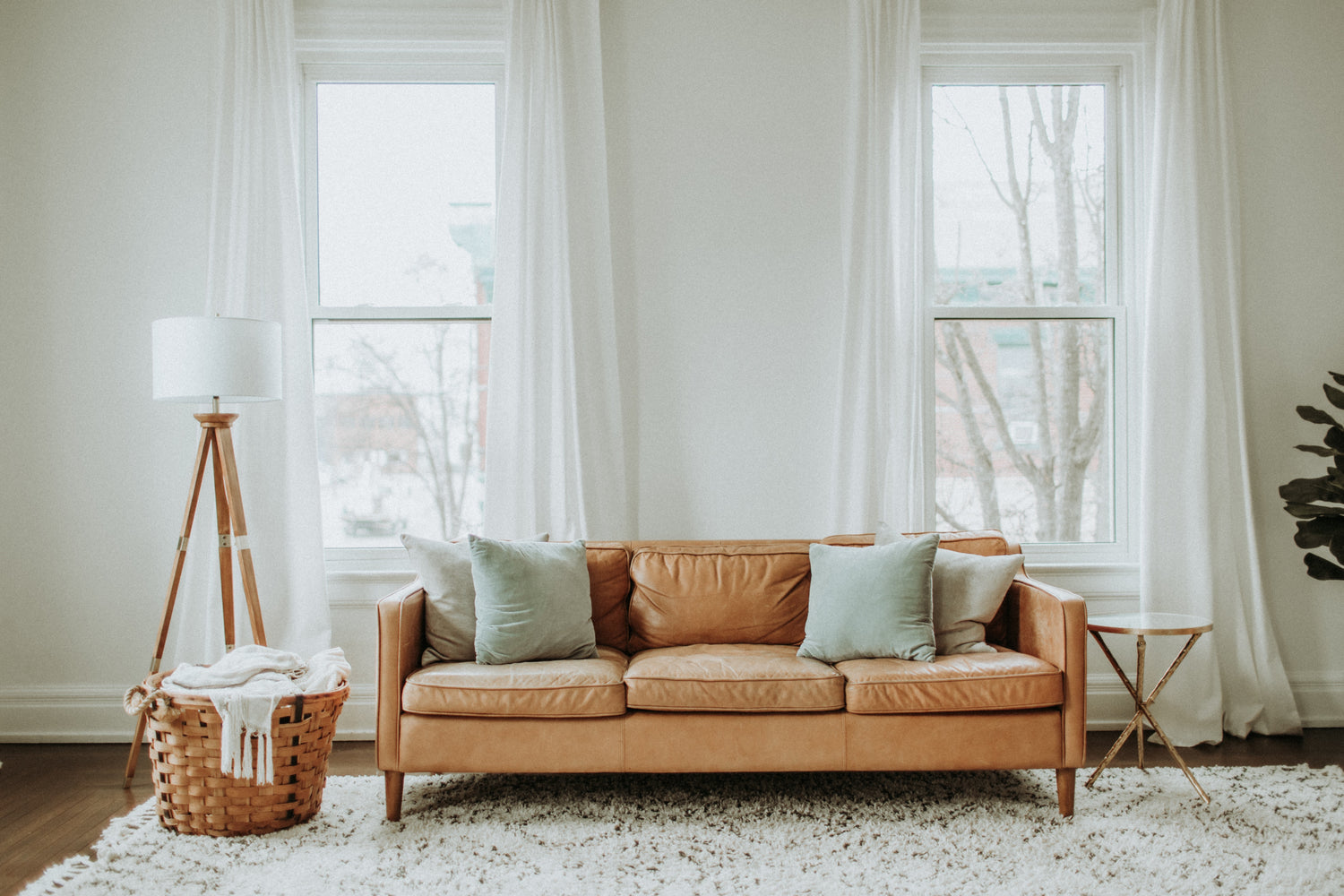
A rug not only transforms your space by adding a touch of elegance and style, but it also provides a feeling of warmth and comfort with every step.

Prepare a cozy living room for autumn without redecorating everything: rugs, lighting, colors, and textures for an inviting space.

Quelle taille de tapis sous une table à manger ? Découvrez la règle des 60 cm, les bons formats selon les places et les erreurs à éviter.

Add character to a rented living room with a rug. Colors, zones, budgets, and reversible tips without making any permanent changes.

A long living room looks more balanced with the right rug. Sizes, placement and dimensions: avoid the hallway effect in your home.