

Short pile
The pattern remains very readable and vacuuming is generally simpler.


A pattern inspired by Persian rugs is not enough to make a product a handcrafted Persian rug of Iranian origin. In interior design, this label is sometimes used very broadly for medallions, floral borders, all-over patterns, or red, blue, and ivory palettes inspired by Oriental rugs. This collection allows you to discover this aesthetic universe while maintaining a clear distinction between style, origin, and manufacturing technique.
In the strict sense, a Persian rug refers to a rug produced in historical Persia, i.e., mainly in the territory of present-day Iran, using various weaving and knotting traditions. In the contemporary commercial world, the term can also be used more loosely to designate a Persian style: central medallion, complex borders, floral patterns, arabesques, or repetitions covering the entire surface.
This difference is essential. A machine-printed or machine-woven rug with a Persian pattern may be very decorative, but it should not be presented as a handcrafted Iranian piece if there is no evidence of that origin. The product page must specify what you are actually buying.
If you are looking for a broader category of contemporary patterns, check out designer rugs. For more modern and sleek lines, modern rugs complete the cozy home.
The central medallion creates a clear focal point. It works particularly well when it remains sufficiently visible under a coffee table or in the center of a bedroom. A very large table may cover a large part of the pattern; this is not necessarily a problem, but it should be anticipated.
An all-over pattern, repeated across the entire surface, is more flexible when multiple pieces of furniture are placed on the rug. The design remains understandable even if the center is partially hidden. Structured borders create a frame that very clearly outlines the rug's shape.
Models labeled "vintage" or "distressed effect" sometimes use a faded print or variations in color to evoke a patina. This appearance does not mean the rug is old. Check the actual age of the product if it is presented as such.
Persian-inspired patterns often use multiple colors, which can make them easier to integrate into a room. A red and blue rug can link a beige sofa to navy blue accessories. An ivory model with touches of burgundy or green will be more discreet. A deep blue background creates a more structuring foundation.
| Palette | Effect | Easy combinations | To watch out for |
|---|---|---|---|
| Red / burgundy | Dense and very present. | Cream, wood, gray, blue. | In large formats, the color becomes dominant. |
| Blue / indigo | Deep, sometimes easier to integrate. | Beige, walnut, off-white, gray. | Compare the actual saturation. |
| Ivory / beige | Brighter and more discreet. | Almost all wood species and colors. | Light patterns can show some stains more easily. |
| Multicolored | Rich and decorative. | Solid-colored furniture, picking up 1 or 2 shades. | Avoid too many competing patterns. |
To filter by color first, also explore red rugs, blue rugs, and beige rugs.
The living room is particularly well-suited for these patterns because it offers enough distance to see the borders and colors clearly. Start, however, with the size. If the rug is too small, the richness of the design can accentuate the impression of an isolated object. Include the sofa and armchairs on the surface of the rug when the layout allows.
See living room rugs for placement and large living room rugs for sectional sofas and large rooms. If the rug has a medallion, center it relative to the seating area or the coffee table rather than the entire room.
With a solid-colored sofa, the pattern can become the main source of detail. With a patterned sofa or a room very busy with artwork and textiles, choose a pattern with softer contrasts or a more restricted palette.
Yes. The contrast between a rich pattern and simple furniture can create a very modern result. Combine the rug with clean lines, a simple coffee table, and a solid-colored sofa. The design then provides the complexity that the furniture lacks.
In a minimalist interior, choose a rug whose palette contains a majority of neutral tones or a single dominant color. In a more eclectic interior, a multicolored piece can serve as a common thread between several objects. The principle is to allow for a clear visual hierarchy.
The Persian style can also work in a bedroom, under a bed, or at the foot of it. An all-over pattern tolerates having part of it hidden. If placement around the bed is your priority, check out bedroom rugs.
A genuine handcrafted Persian rug is often associated with wool, cotton, or sometimes silk depending on traditions and pieces, but this does not mean that all products in this collection use these materials. Contemporary models inspired by Persian style can be made of synthetic fibers, printed, or machine-woven.
Therefore, do not consider the material as proof of origin. Wool can be manufactured industrially outside of Iran; polyester can reproduce a Persian pattern in a decorative way. Choose according to your usage: pile height, ease of vacuuming, softness, foot traffic, and care instructions.
The pattern remains very readable and vacuuming is generally simpler.
Provides more comfort and can give depth to the colors.
Practical under a table and in areas where furniture is moved regularly.
Allows for very fine details on a relatively flat surface. Care depends on the backing and the inks used.
The most reliable method is not to "guess" from the back or the fringes, but to consult documented information. The seller must be able to indicate the origin, method of manufacture, composition, and, when it is a specific piece, the available provenance elements.
A back where the pattern is visible may indicate a certain type of construction, but it is not, by itself, proof of Iranian origin. Integrated fringes are not enough either. Knot density can be relevant for some knotted rugs, but it is not a universal test of authenticity.
Also avoid assuming that an "antique," "semi-antique," "rare," or "collector's" rug automatically increases in value. These notions depend on many criteria and require specific expertise. For a general retailer, the main goal must be to honestly describe the product sold.
The borders and medallions make the size particularly visible. In a living room, favor a large enough surface so that the pattern is not reduced to a small island under the coffee table. In a dining room, allow for the chairs to be pushed back. In a bedroom, choose the position based on the bed and the part of the design you want to leave visible.
Use masking tape to visualize the surface. If a central medallion is important, mentally place the coffee table or the bed over it. A large piece of furniture may hide the detail you liked the most in the photo of the entire rug.
A round or oval shape with a Persian pattern can work under a table of the same shape, but always check the actual dimensions. The round rug collection expands on diameter criteria.
A medallion or complex border does not prove Iranian manufacture.
A table or bed may hide the part of the design you liked the most.
A richly decorated rug may seem even more isolated if it is undersized.
The manufacturing technique must be explicitly stated.
Handcrafted wool and printed synthetics do not require the same maintenance.
A weathered print can be completely contemporary.
The answer depends entirely on the manufacture. A handcrafted wool or silk rug is not treated like a printed synthetic model. Therefore, do not follow a single recipe just because the pattern is Persian.
There is no universal frequency for professional cleaning. It depends on the material, the foot traffic, the environment, and the condition of the rug.
No. The collection may include Persian-style models. Check the country and manufacture on each product page.
In the traditional sense, many Persian rugs are hand-knotted or woven, but a product marketed with a Persian pattern may be machine-made. The product page must specify this.
Beige, cream, gray, brown, or blue can work. A solid-colored sofa generally lets the design "breathe" better.
Yes. The contrast between a complex pattern and simple furniture is an easy combination to build.
A serious estimate requires expertise that takes into account the origin, condition, technique, materials, age, and market. A collection page cannot establish this.
Also explore Berber rugs, designer rugs, red rugs, blue rugs, and living room rugs.
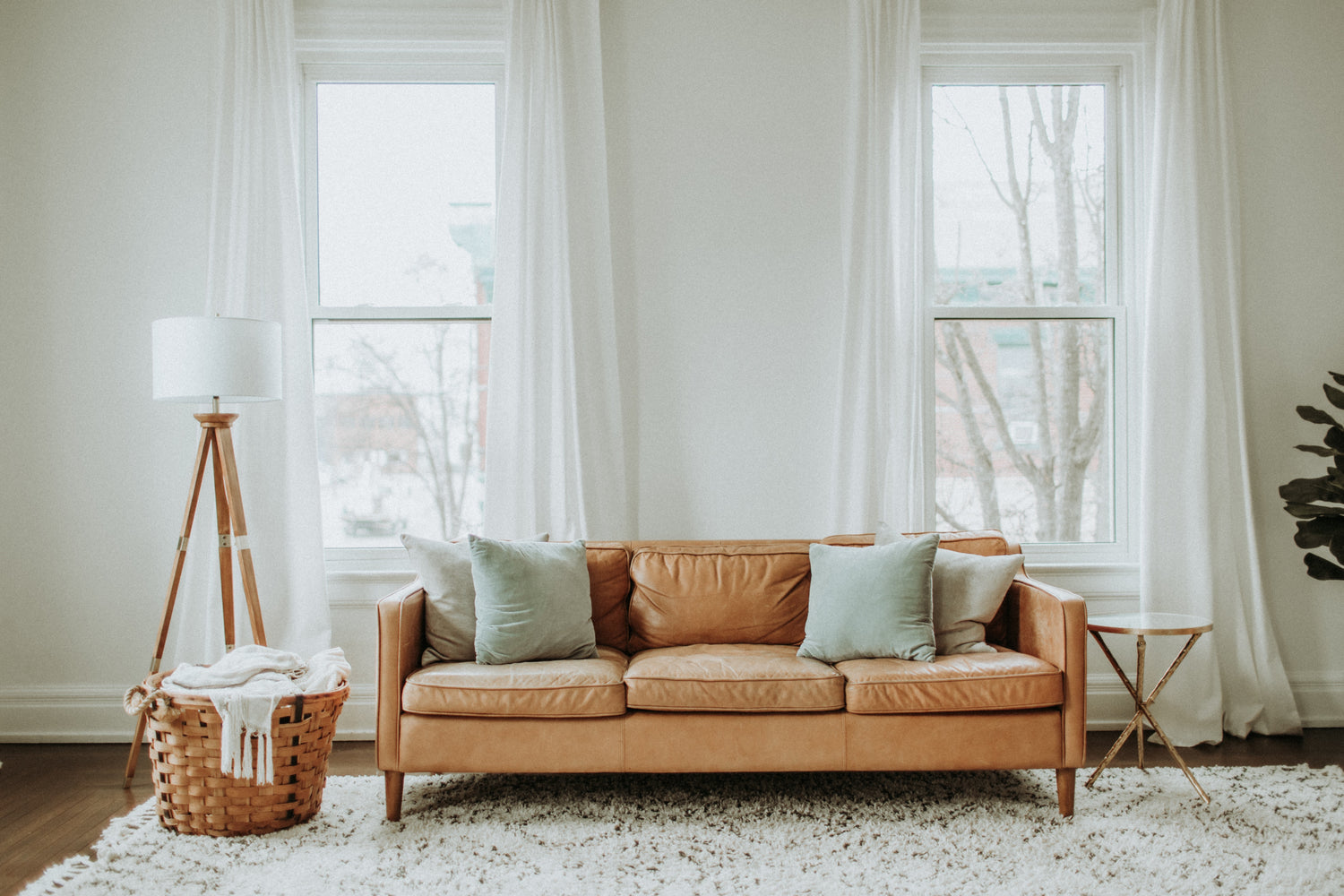
A rug not only transforms your space by adding a touch of elegance and style, but it also provides a feeling of warmth and comfort with every step.

Une assise bouclette possède déjà un relief fort. Choisissez un tapis qui équilibre sa texture, son volume et sa couleur avec des exemples précis du minimalisme aux motifs vintage.

Superposer un tapis et une moquette est possible dans certains cas. Découvrez comment examiner le support, limiter la surépaisseur et conserver un ensemble stable et facile à entretenir.

Le canapé blanc laisse une grande liberté au tapis. Voici comment choisir entre continuité claire, contraste brun, terracotta, olive et motifs sans rendre le salon froid.

Poils, épaisseur, franges, bords et serpillières : les critères à vérifier pour choisir un tapis adapté à votre robot aspirateur et tester son passage.