

Central area
Provide enough surface area so that the child can sit with their toys without blocking the path to the bed or storage.


A rug for children should be chosen based on what the child will actually be doing on it. Playing with toy cars, reading, building, getting dressed by the bed, or simply enjoying a more pleasant floor don't all require the exact same surface. Before looking at the pattern, check the size, pile height, stability, maintenance, and the space left for doors and storage.
The first criterion is not the age indicated in a catalog, but the function of the zone. A rug installed in front of storage units can become a play area. Near the bed, it primarily provides comfort when getting up. Under a small table, it must allow chairs and manual activities to function properly. In a reading corner, a softer surface can be pleasant.
Provide enough surface area so that the child can sit with their toys without blocking the path to the bed or storage.
A rug partially positioned under the bed or a bedside runner may be enough. For placement, also consult bedroom rugs.
A small rug or a round rug can define a space with an armchair, cushions, and a bookshelf without covering the entire floor.
A relatively flat surface makes it easier to use chairs for drawing, puzzles, and activities where small pieces fall to the ground.
If the main function is truly play, the play mat collection allows you to go further with tracks, construction, and surfaces adapted for floor activities.

Start by measuring the free space rather than the entire room. The bed, wardrobe, dresser, and desk already occupy part of the floor. The rug should intelligently use what remains. A very large model may seem comfortable but can become difficult to clean if it goes under several heavy pieces of furniture.
| Use | Format to test | Check for |
|---|---|---|
| Large play area | Size allowing the child and main toys to stay on the surface. | Walkways, door, and access to storage bins. |
| Near the bed | Runner or rug partially under the bed. | The visible area actually accessible when getting up. |
| Reading corner | Small rectangle or round. | Armchair, cushions, and circulation around them. |
| Small table | Surface encompassing table and chairs. | Seat clearance and cleaning. |
| Shared room | One large common rug or two clearly distinct zones. | Avoid unnecessarily fragmenting the walkway. |
The height of the surface directly influences daily life. A short pile makes it easier to spot small game pieces and generally facilitates vacuuming. A softer velvet can be pleasant for reading or sitting. A very long pile adds volume but traps more crumbs and can complicate play with small wheels.
Versatile for games, bedrooms, and vacuuming. Small pieces remain easier to spot.
Stable under small tables and practical for cars, trains, puzzles, or building.
Interesting for a reading corner or an area where the child spends time sitting. Check maintenance and drying instructions.
Very visually comfortable, but less practical for certain toys. It generally requires more careful vacuuming.
Material alone is not enough to predict these behaviors. Cotton, polyester, polypropylene, and wool exist in very different constructions. Look at the weave, density, backing, and specific instructions.
For toy cars and trains, a relatively flat surface allows wheels to roll more easily. For bricks and construction sets, a base that is too soft can make towers unstable. For figurines, the main thing is that small pieces remain visible.
A pattern can enrich play: roads, animals, shapes, or illustrated scenes provide starting points for imagination. This does not mean that an illustrated rug has specific educational efficacy. It can support an activity but should not be presented as a certified pedagogical tool without specific elements.
If the child plays mainly on the floor, place the rug in front of their storage rather than on the opposite side. Toys can thus come out directly onto the surface and be put away more easily. This organization often counts for more than a very complex pattern.
To explore this need in depth, consult play mats, designed as a functional sub-universe of the kids' rug.
Check the backing and the floor. The same rug can be stable on a rough surface and move on parquet or smooth tile. If an underlay is necessary, choose one compatible with your flooring and slightly smaller than the rug so it remains invisible.
Avoid improvised permanent adhesives that can leave marks on parquet, laminate, or vinyl flooring. After washing or moving, place the rug and underlay perfectly flat. Keep a close eye on corners placed in high-traffic areas.
A curling edge can be caused by shipping or by a door pushing it regularly. Let the rug relax and correct the position if necessary. The comfort of a rug should not be confused with fall protection equipment.
The rug can be the main graphic element or serve as a calm base for an already colorful room. With wallpaper, toys, and bedding already present, beige, gray, or a light pattern provides more breathing room. On neutral walls, a bright color or a stronger illustration can become the focal point.
Very specific themes sometimes evolve with taste, but that is not a reason to avoid them if the child truly likes them. For more flexibility, geometric patterns, subtle animals, stars, or abstract shapes often adapt easily when the decor changes.
Color doesn't need to follow gender codes. Pink, blue, green, red, beige, or black and white can suit any child according to their preferences. The girls' rug collection brings together a specific research universe, but the choice should remain guided by the child's actual tastes.

For a toddler who plays a lot on the floor, stability, maintenance, and available surface area are often priorities. For an older child, the rug can become a construction zone, a reading space, or simply a decorative element. By the time they reach adolescence, tastes and ease of maintenance may take precedence over playfulness.
A neutral or graphic rug can follow several stages of decor, but a specific theme can also be moved to a playroom when tastes change. The durability of use therefore does not depend solely on the pattern: a suitable size, an easy-to-maintain material, and good construction count for a lot.
Avoid intentionally choosing a rug that is too large "for later" if it gets in the way today. A room that is functional now is more useful than a hypothetical future use. Measure the room as it is currently.
A relatively short surface can simplify vacuuming hair and limit small pieces hidden in the pile. Certain loops or long fringes can snag claws more easily. Also check that the rug remains stable when an animal runs quickly across the room.
Color influences hair visibility: a rug that contrasts sharply with the fur shows traces more between vacuums. A nuanced shade can be more visually tolerant without being truly cleaner.
If accidents or marks are frequent, a machine-washable rug can be interesting, but check the volume and allowed program before choosing a large format.
The best routine is regular and simple. Remove toys and small pieces before vacuuming. Treat liquids quickly depending on the material. Also clean under the rug to prevent dust and small debris from accumulating there.
The words "child," "natural," or "soft" do not constitute certifications. If the composition, emissions, an allergy, or a sensitivity are important for your household, check the precise data and any certifications for the product in question.
A rug should not be called hypoallergenic just because it is made of cotton, synthetic material, or has a short pile. Ease of vacuuming can be a practical criterion, but it does not replace medical advice in the event of a known allergy.
Similarly, the phrase "chemical-free" is not scientifically relevant: all materials are made of chemical substances. For an informed purchase, look instead for concrete information on composition, compliance, and certifications when they are available.
Size, surface, and maintenance will have more impact on a daily basis.
The child and the toys immediately overflow from the play area.
A very long pile can complicate finding bricks, beads, or accessories.
Check the backing and the floor type before adding an underlay.
An illustrated rug is not automatically educational, hypoallergenic, or protective.
Machine use, temperature, and drying must be authorized by the product.
Choose first according to the play area, stability, and maintenance. A short or medium surface is often versatile, but the specific product remains the deciding factor.
No, but it can be practical. Check above all that its size, weight, and program are compatible with your washing machine.
A relatively flat surface generally makes rolling easier and makes it easier to find small pieces again.
Follow their tastes and the room's decor. No color is reserved for any particular gender or age.
It can make the surface softer, but should not be considered certified protective equipment without specific indication.
Look at the composition, ease of maintenance, and any certifications. In case of a known allergy, follow medical advice rather than a generic promise.
Not necessarily. For a play area, it is often more useful to keep the majority of the surface accessible in front of storage units.
For a dedicated area, discover play mats. For placement around the bed, consult bedroom rugs. For maintenance, explore machine-washable rugs. For a different shape, move on to round rugs or return to the rug hub.
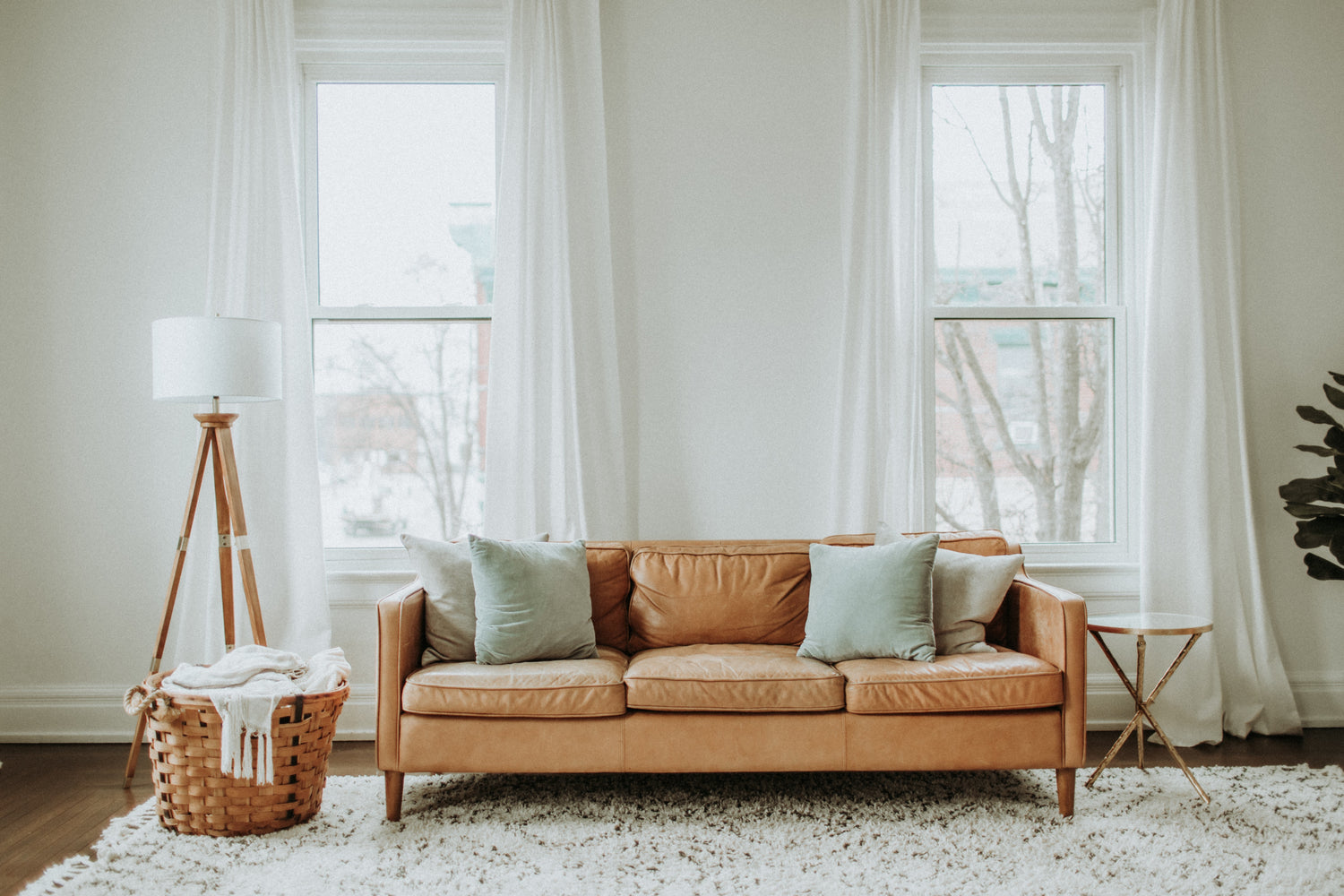
A rug not only transforms your space by adding a touch of elegance and style, but it also provides a feeling of warmth and comfort with every step.

Une assise bouclette possède déjà un relief fort. Choisissez un tapis qui équilibre sa texture, son volume et sa couleur avec des exemples précis du minimalisme aux motifs vintage.

Superposer un tapis et une moquette est possible dans certains cas. Découvrez comment examiner le support, limiter la surépaisseur et conserver un ensemble stable et facile à entretenir.

Le canapé blanc laisse une grande liberté au tapis. Voici comment choisir entre continuité claire, contraste brun, terracotta, olive et motifs sans rendre le salon froid.

Poils, épaisseur, franges, bords et serpillières : les critères à vérifier pour choisir un tapis adapté à votre robot aspirateur et tester son passage.