

Living room
A living room rug must be sized relative to the sofa, armchairs, and coffee table. If you have a large seating area, consider large living room rugs as well.


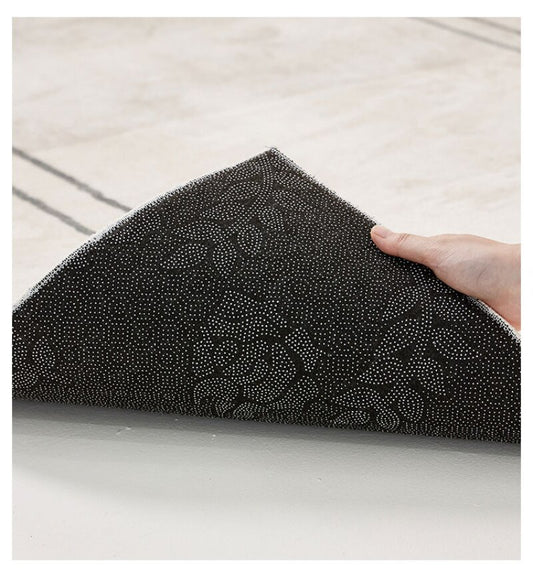

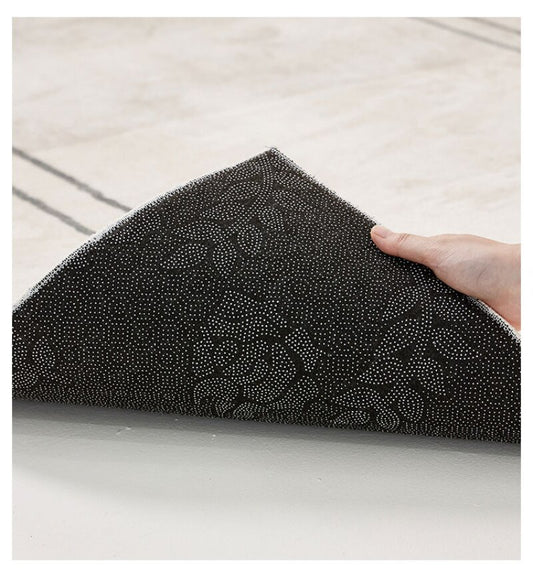

Choosing a rug isn't just about finding a pattern you like. The right model must work with the room, the furniture, the walkways, your way of life, and the level of maintenance you are prepared to commit to. A rug can structure a living room, make a bedroom more inviting, protect a high-traffic area, add a splash of color, or simply create a more comfortable feeling underfoot. Its success depends primarily on consistency between dimensions, usage, material, texture, and style.
The first useful filter is the room itself. A living room rug should create a relationship between the seating and the coffee table. A kitchen rug must be easy to maintain. In a bedroom, comfort and placement around the bed become more important. In a hallway, thickness, stability, and door clearance become priorities.
A living room rug must be sized relative to the sofa, armchairs, and coffee table. If you have a large seating area, consider large living room rugs as well.
A bedroom rug can frame the bed, serve as a bedside mat, or create a reading nook. Always check door clearance, nightstands, and closets.
In a kitchen, choose a surface consistent with crumbs, spills, and foot traffic. Find models intended for this purpose under kitchen rugs.
A bath mat addresses specific requirements for drying, absorption, and stability. Do not automatically apply the criteria of a classic textile rug here.
For a long, busy area, a hallway runner must allow doors to function and remain consistent with the available width. At the threshold, a doormat serves a different purpose.
An outdoor rug must be explicitly designed for the conditions it will be exposed to. "Outdoor" does not automatically mean waterproof or UV-resistant.
For the little ones, floor usage, ease of maintenance, and stability matter a great deal. Our kids' rugs and play mats collections allow you to target these needs without mixing the criteria of an adult living room with those of a bedroom or play area.

Size is often the criterion that most impacts the visual result. A rug that is too small can seem to float between the furniture. A more generous size creates a common base, provided that walkways are respected. However, there is no universal dimension: the width of the sofa, the size of the bed, the openings, and the room's layout are more useful than a rule based solely on square meters.
| Area | Good benchmark | Check before purchase |
|---|---|---|
| Living room | The rug should visually participate in the seating area. | Sofa, armchairs, coffee table, walkways, and TV stand. |
| Bedroom | A useful portion of the rug should remain accessible around the bed. | Nightstands, doors, closets, and bed width. |
| Dining table | Account for the actual space needed to pull out chairs. | Table in normal configuration and with extensions if you use them. |
| Hallway | The rug should accompany the walkway without filling it completely. | Width, thresholds, and bottom of doors. |
| Reading nook | The rug can define the armchair, lamp, and small table. | Traffic flow around the area. |
The rug should have a clear relationship with at least one group of furniture. In the living room, resting the front legs of the sofa and armchairs on the rug is a versatile solution. In a bedroom, a large model can go under the bed and extend out the sides; two smaller ones can also work if you are just looking for comfort when you get up.
In an open-plan room, the rug often serves as a visual boundary. It can define the living area without partitioning the space. In this case, leave a strip of floor free before the dining room or kitchen so that the room's functions remain clear. The goal is not to cover as much floor as possible, but to create a coherent composition.
Placing a rug at an angle can work when the architecture or furniture justifies it, but a slight accidental misalignment often gives a less polished look. Before choosing an unconventional placement, test the alignment with the main piece of furniture first.
The rectangle remains the easiest format to pair with a sofa, bed, or rectangular table. It naturally follows the lines of contemporary rooms. A round rug softens angles and works particularly well under a round table, in a reading nook, near an armchair, or in an entryway where you want to break up strict geometry.
Organic or irregular shapes catch the eye more. They are interesting when the rug needs to be a strong decorative element, but carefully check their maximum dimensions. A measurement listed as "160 cm" on a free-form shape does not guarantee the same usable surface area as a 160 cm wide rectangle.
For a material + shape approach, our round jute rug collection lets you compare models that combine a round silhouette with the textured look of this fiber.
The composition gives an initial indication, but it is not enough to predict how a rug will perform. Density, weave, pile height, backing, finishes, and the manufacturer's instructions count just as much. Two rugs containing the same fiber can therefore be very different to the touch, when vacuuming, or when dealing with a stain.
Often easier to vacuum and use under moving furniture. A logical choice for high-traffic areas or a family living room.
A shaggy rug adds volume and a more cozy feeling. On the other hand, crumbs and hair may require more attention.
A seagrass rug and jute have a firmer, more textured feel. They generally need to be protected from excessive moisture, according to their care recommendations.
A vinyl rug does not offer the same feel as a textile rug: it is more about a flat surface, graphic design, and practical maintenance.
A machine-washable rug can simplify certain tasks, but always check the weight, cycle, temperature, and actual capacity of your machine.
Look at the close-up photos and construction details. The name of the fiber alone does not tell you if a rug will be soft, dense, thin, or highly textured.
A low-maintenance rug is not necessarily the one with the most marketing hype. Start with your actual daily routine: daily vacuuming with a robot, standard vacuuming once a week, children playing on the floor, meals in the living room, a shedding pet... These situations dictate the choice more than a general promise of "easy maintenance."
A relatively short and dense surface is often faster to vacuum than a very long pile. A subtle pattern or nuanced color sometimes masks small dust better between cleanings than a perfectly solid white or a deep black. For areas where accidents are frequent, check if spot cleaning is allowed and how the product should dry.
Never assume a rug is stain-resistant, waterproof, non-slip, or washable just because the material seems suitable to you. These properties must be specified on the product page or in the manufacturer's recommendations.

The rug does not need to perfectly match the sofa, curtains, and cushions. Decor often looks more natural when elements harmonize without being identical. You can pick up a secondary shade from the rug in a cushion, echo the warmth of wood with a beige tone, or intentionally create a contrast between a light sofa and a more graphic floor.
For a bright or easy-to-pair base, explore beige rugs, white rugs, or gray rugs. For a stronger presence, our blue rugs, green rugs, pink rugs, and red rugs collections allow you to build a colorful palette. A black and white rug provides a very clear graphic contrast.
In terms of decorative style, compare our modern rugs, designer rugs, and checkered rugs. Terms like Berber rug or Persian rug may describe an aesthetic inspiration; check the product page if the origin, technique, or place of manufacture are important to you.
In a very active household, prioritize the criteria you will use every day. With a pet, a short pile or a dense surface can make vacuuming easier; long fringes and certain loops may be less practical depending on claws. With young children, check the stability, edges, texture, and how to treat stains.
If you use a robot vacuum, check the thickness of the rug, the height of the edges, and the presence of fringes. For a rug placed on a smooth floor, a rug pad can improve stability, but it must be compatible with the flooring. Some vinyl or varnished floors can react to unsuitable backing.
A good buying decision often comes down to the technical details. Before adding to your cart, check at least six pieces of information: exact dimensions, composition, construction or pile height when indicated, type of backing, maintenance instructions, and available variants.
The design may be superb, but a rug that is too small will remain difficult to integrate. Validate the proportions first.
Synthetic does not automatically mean stain-resistant; cotton does not automatically mean washable; natural does not automatically mean eco-friendly.
A few millimeters of thickness can be enough to make a door or low piece of furniture rub.
Multiple isolated rugs can fragment the room. A more cohesive surface is sometimes more harmonious.
Stability depends on both the rug and the floor. A rug pad must be chosen for both.
The rug must adapt to your furniture, your lighting, and your habits, not just replicate a staged photo.
There is no universal method. Always start with the model's instructions. Regular vacuuming limits the accumulation of dust and abrasive particles. In case of a liquid spill, blot the excess with a clean cloth rather than rubbing aggressively.
Adapt the vacuum's power and brush head to the pile height. Plant-based fibers generally require more caution with moisture. Machine washing is only an option if the product page allows it and if the weight of the wet rug remains compatible with your appliance. Occasionally rotating the rug can also distribute wear and light exposure.
There is no universal size. The best format is the one that creates a clear relationship with the furniture while allowing walkways to function. The masking tape test is more reliable than a general rule.
A relatively short, dense pile is often faster to vacuum than a very long pile, but the exact construction and the power of the vacuum also matter.
No. A complementary color, a shade used elsewhere, or an intentional contrast can be more interesting than an identical match.
The product sheet or label should specify this. Also check the cycle, temperature, drying instructions, and especially your machine's capacity for the chosen size.
No. The fiber is just one factor among others. The weave, backing, dyes, and care instructions determine the truly appropriate method.
Check its backing and your floor type. If necessary, use a rug pad specifically compatible with both surfaces rather than an improvised adhesive.
Start by the room: living room rug, bedroom rug, kitchen rug, bath mat, or outdoor rug. Then refine by shape, material, or style: round rug, shaggy rug, modern rug, designer rug, or machine-washable rug.
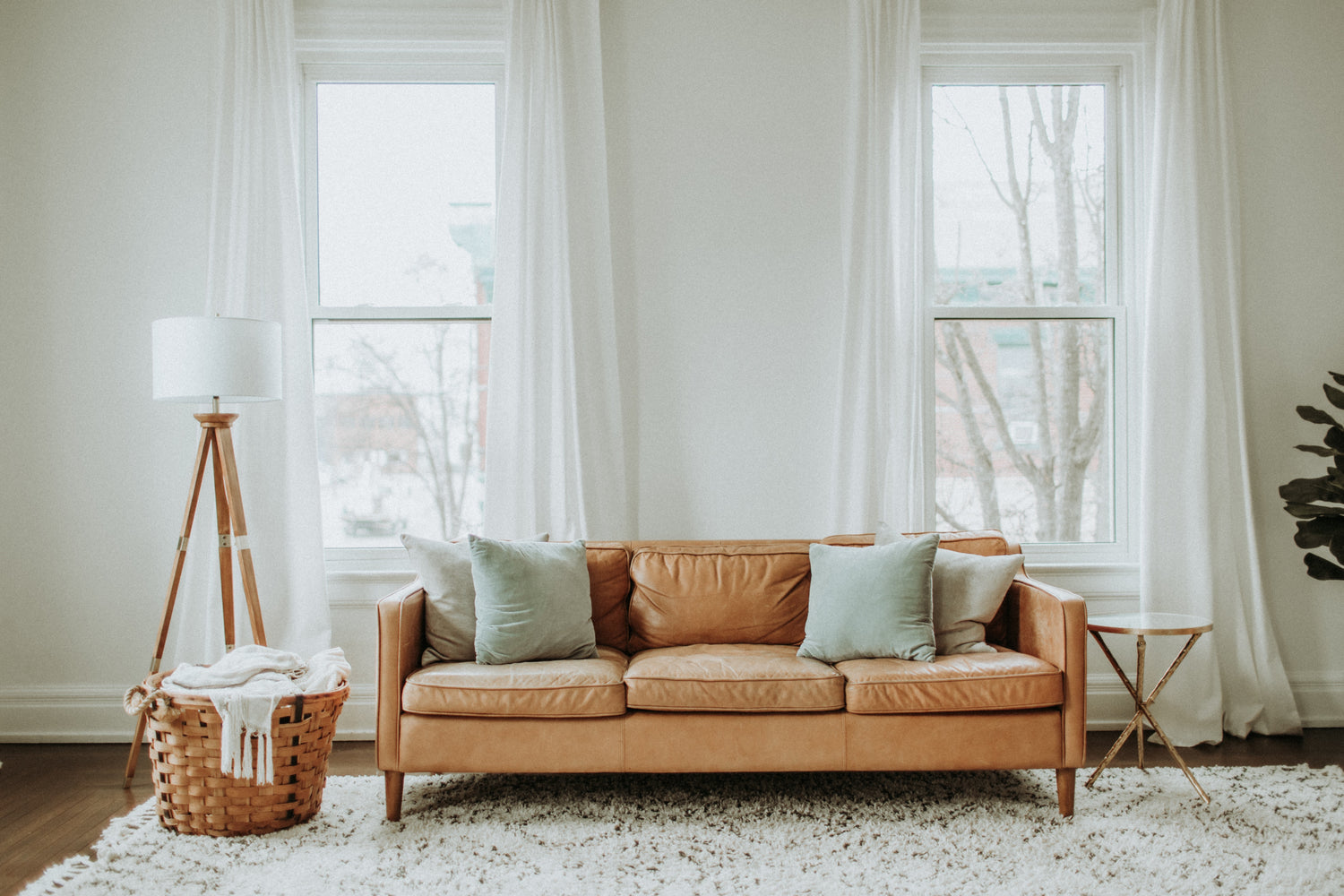
A rug not only transforms your space by adding a touch of elegance and style, but it also provides a feeling of warmth and comfort with every step.

Quelle taille de tapis sous une table à manger ? Découvrez la règle des 60 cm, les bons formats selon les places et les erreurs à éviter.

Add character to a rented living room with a rug. Colors, zones, budgets, and reversible tips without making any permanent changes.

A long living room looks more balanced with the right rug. Sizes, placement and dimensions: avoid the hallway effect in your home.

Navy, duck egg, or light blue sofa: discover which rug color, size, and style to choose to create a balanced and elegant living room.