


Should you coordinate rugs and curtains?
Yes, but they certainly don't need to be identical. For a cohesive room, the simplest way is to create a link of color, temperature, or material between the rug and the curtains. If the rug is very striking, keep the curtains calmer. If the curtains carry the main pattern, choose a more discreet rug. The goal is for the two textiles to complement each other without giving the impression of having bought a matching set.
1. Patterned rug + plain curtains picking up a secondary color from the rug.
2. Neutral rug + colorful curtains to give the window the main role.
3. Different neutral rugs and curtains — beige, off-white, greige, taupe — with contrasting textures to avoid a flat result.
1. Do rugs and curtains have to be the same color?
No. Two large textile surfaces that are exactly identical can even make a room feel too static. It is often more elegant to maintain a relationship rather than a copy. A warm beige rug can work with off-white curtains; a blue and cream rug with blue-grey curtains; an olive green rug with natural linen.
You can coordinate the two elements in four ways: by color, by tone temperature, by texture, or by level of contrast. It is sufficient for one or two of these parameters to be coherent.
The rug is on the floor and the curtains occupy a large vertical surface: their relationship therefore strongly influences the perception of the room. But the sofa, walls, and floor must remain part of the equation.
2. How to choose the right colors for rugs and curtains?
Start by looking at the dominant color of the room: walls, sofa, and floor. Then, decide which of the two textiles — rug or curtains — should add more character.
If the sofa is beige and the walls are light, a colorful rug can become the focal point and the curtains can pick up a softer shade. If the sofa is already deep blue or green, off-white curtains and a more neutral rug avoid adding a third large block of color.
Undertones also matter. A very warm yellow beige does not have the same effect as a cool greige. When two neutrals are close but not identical, make sure the difference is intentional: lighter, darker, or more textured.
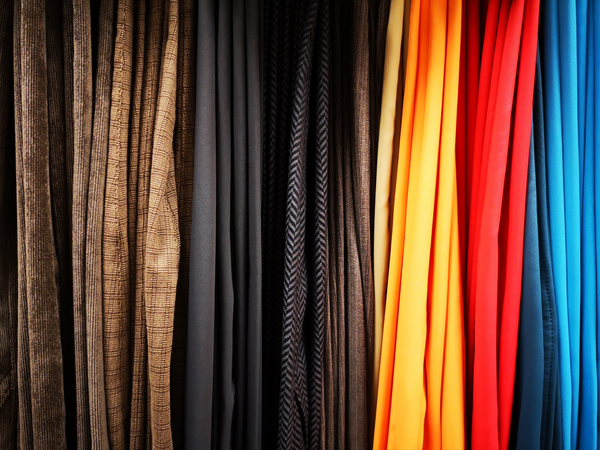
If you are looking for a particularly warm atmosphere, our guide what color for a warm living room helps build the overall palette before choosing textiles.
3. Patterned rugs and patterned curtains: can you mix the two?
Yes, but there needs to be a hierarchy. The safest way is to choose one main pattern and a more discreet secondary pattern. If the rug has a large geometric design, the curtains can have a fine stripe, a woven texture, or remain plain.
When both are printed, vary the scale: large pattern + small pattern usually works better than two designs of the same size and contrast. Also keep one or two common colors to create the link.
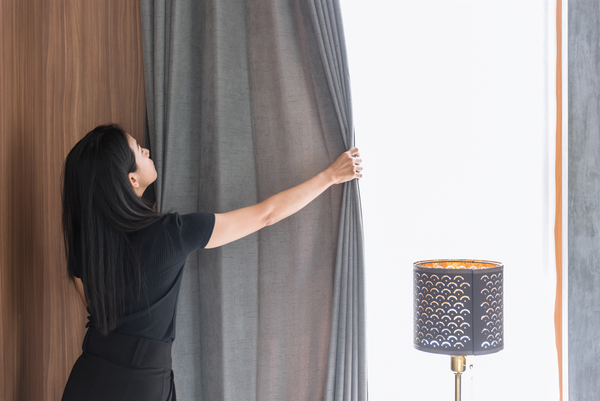
4. Textures can coordinate two different colors
Texture allows for coherence without repeating colors. A jute rug or one with a visible weave naturally matches linen or linen-effect curtains. A soft pile rug can converse with heavier curtains in an enveloping room.
However, it is not necessary to use the same material. On the contrary, texture contrast often adds more depth: thick rug + light curtains, flat woven rug + velvet curtains, plain rug + textured curtains.
Function remains paramount. Blackout curtains may be necessary for a bedroom or a very exposed living room; a short-pile rug may be preferable with pets. Coordinate aesthetics within these constraints, not the other way around.

5. Light changes the harmony between the rug and the curtains
Curtains directly filter the light that illuminates the rug. A color can therefore appear different depending on whether they are open or closed. Before validating a combination, if possible, observe the textiles in natural light and then in the evening.
Thick, dark curtains reduce brightness when closed; in an already dark room, a very dark rug can then weigh down the overall look. Conversely, a very bright room can tolerate a more marked contrast.
Rug velvets also change visually depending on the pile direction. An area may appear lighter without the color being different. Therefore, do not seek a perfect match between two textiles that do not receive light in the same way.
6. The sofa should act as an intermediary between the rug and curtains
In a living room, looking only at the rug and curtains is a mistake: the sofa is visually between the two. It can either connect their colors or serve as a neutral zone.
| Sofa | Rug | Curtains | Effect |
|---|---|---|---|
| Beige | Blue / cream | Off-white or blue-grey | Cool but soft contrast |
| Grey | Terracotta / beige | Natural linen | Warms up the room |
| Green | Off-white / brown | Warm beige | Botanical and natural palette |
| Blue | Beige or light blue pattern | Cream | Balances the sofa's color mass |
If the sofa and curtains are already very close in color, the rug can create a contrast. If the sofa contrasts sharply with the walls, the rug and curtains can, on the contrary, calm the overall look.
7. What rug + curtain combinations for different decor styles?
Natural style: jute, off-white or textured beige rug with linen, off-white, sand or soft olive curtains.
Contemporary style: geometric or plain contrasting rug with smooth curtains, often in a shade taken from the rug or sofa.
Vintage style: rug in faded tones, terracotta, blue or brown with plain curtains to let the rug's pattern breathe.
Minimalist style: two different neutrals and clearly visible textures. For example, a boucle greige rug + matte ivory curtains.
Maximalist style: several patterns can coexist, but keep a common palette and vary their scale to avoid a random effect.
8. Mistakes to avoid
- Seeking an exact color match: differences in light often make "perfect matching" impossible and unnecessary.
- Choosing two dominant patterns of the same scale: designate one main element.
- Forgetting the sofa and floor: they represent larger surfaces than some accessories.
- Choosing curtains solely for the rug: their opacity and light management remain priorities.
- Multiplying repetitions: a common color can be repeated once or twice, not necessarily everywhere.
- Ignoring proportions: a rug that is too small remains a problem even if its color is perfectly coordinated.
FAQ: coordinating rugs and curtains
Should the rug and curtains be the same color?
No. A common color, the same tone family, or a compatible texture is sufficient. A deliberate difference often gives a more natural result.
What to choose if the rug has many patterns?
Plain or very subtly textured curtains are the simplest solution. You can pick up a secondary color from the rug.
Can a beige rug be paired with colorful curtains?
Yes. The beige rug creates a calm base and allows the curtains to bring in green, blue, terracotta, or another color consistent with the sofa and walls.
How to coordinate rugs and curtains in a small living room?
Above all, avoid multiplying large patterns. A light or medium base, a main pattern, and proper rug sizing keep the room legible.
Should you buy the rug or curtains first?
Start with the most restrictive or visually strongest element. If you have found a specific patterned rug, then coordinate the curtains; if you need specific blackout curtains, do the opposite.
You don't need a perfectly matched set. Choose a rug that structures the living room, then have the curtains converse with a color or texture already present.
Discover living room rugsThe answer to "should you coordinate rugs and curtains?" is therefore yes, but without copying them. Create a visible link between the two, choose which one carries the main pattern or color, then let the sofa, walls, and light balance the whole.