

Short velvet
Good pattern readability and moderate comfort. Suitable for many living rooms and bedrooms.


A designer rug stands out through a strong visual intent: shape, pattern, relief, contrast, or color composition. A designer rug should not be confused with a "designer" rug signed by a specific creator, unless the product sheet specifies it. This collection gathers designer rugs whose graphic design or construction can become a significant element of your decor, from the living room to the bedroom.
The two categories overlap, but their intent can be distinguished. A modern rug corresponds to a current aesthetic in the broad sense: textured solid colors, geometric, abstract, neutral, or colorful. A designer rug focuses more on a visual idea: unusual shape, graphic composition, marked relief, strong contrast, or a design that becomes almost a decorative work of art on the floor.
The word "designer" does not automatically mean high-end, handmade, exclusive, or signed by a famous designer. These characteristics must be verified on the product. An industrially manufactured designer rug can have an excellent design and be perfectly suited for a contemporary interior without the need to attribute it to an undocumented artistic origin.
This distinction also helps to understand the collection: the modern page caters to a general search for a current style, while this page addresses the question "which designer rug should I choose to give my room some character?"
Abstract patterns work well when you want a designer rug that is present but less rigid. They often blend several colors and can therefore serve as a bridge between the sofa, curtains, and accessories. Geometric patterns provide more structure and dialogue easily with the lines of contemporary furniture or architecture.
The checkerboard rug is one of the most assertive patterns because its regular repetition creates an immediate rhythm. A designer rug with curved lines, organic shapes, or sculpted reliefs can bring softness without necessarily multiplying colors. A designer rug can also be almost monochrome: the texture then becomes the main decorative element.

The living room provides enough perspective to appreciate a large pattern. If the sofa is solid-colored and the walls relatively sober, the designer rug can become the main graphic element. With a patterned sofa, a very colorful bookcase, or several strong artworks, a calmer designer rug avoids creating too much competition.
Size remains the priority. A designer rug should be part of the composition of the sofa and coffee table. Let the front feet of the seating rest on it when the layout allows. Use the living room rug hub for placement and large living room rug if the living area or sectional sofa requires a significant format.
In an open-plan living room, the designer rug can define the lounge area. Do not necessarily try to coordinate it exactly with the dining room rug. A common color or a similar level of contrast is enough to connect the two spaces.

The rectangle is the easiest to align with a sofa, bed, or table. A rectangular designer rug naturally structures rooms with straight lines. A round rug can break this geometry and create a reading corner, accompany a round table, or bring more movement to a bedroom. For this shape, also check out our round rugs.
Organic or irregular shapes themselves become a key element of the designer rug. They work particularly well when their outline remains visible and is not hidden under numerous pieces of furniture. In a small space, an organic designer rug can delineate a zone without giving the impression of adding another large rectangle.
However, do not choose an original shape just because it looks spectacular in a photo. Check the orientation, the width of the walkways, and how the furniture will actually rest on the designer rug. A complicated contour can make the layout less flexible if you often change the living room arrangement.
The design of a designer rug can be achieved through printing, variations in pile, tufting, weaving, relief, or a combination of materials. The composition influences the touch and maintenance, but the construction technique is just as important. A polyester designer rug can be low-pile or shaggy; a wool designer rug can be looped, velvet-like, or woven.
Good pattern readability and moderate comfort. Suitable for many living rooms and bedrooms.
The design appears through the texture. Very decorative under side lighting, but vacuuming must respect the height variations.
Practical for sharp designs, chairs, desks, and high-traffic areas.
Texture dominates over graphic precision. For this cocoon-like feel, explore shaggy rugs.
Avoid shortcuts like "polypropylene = stain-resistant" or "wool = hypoallergenic." The properties of the designer rug must be confirmed on each product sheet.
A designer rug does not need to be multicolored. A sculpted beige designer rug, an embossed black designer rug, or a grey one with several pile heights can be very graphic. If the furniture is already colorful, these monochrome options allow you to add design without adding a new palette.
In a neutral room, a blue, green, pink, or red designer rug can become the focal point. Our blue rug, green rug, pink rug, and red rug collections allow you to refine your search by shade.
Black and white is particularly effective for a geometric designer rug. Check out our black and white rugs if the palette is your main criterion. If you prefer a softer look, beige, greige, and ecru can let the texture of the designer rug do the work.
| Room | Priority | Recommended designer rug type |
|---|---|---|
| Living room | Size and dialogue with the sofa. | Large-format abstract, geometric, relief. |
| Bedroom | Comfort and proportion around the bed. | Textured, organic, softer colors, or targeted accent. |
| Dining room | Chair movement and maintenance. | Flat weave, legible pattern, large format. |
| Office | Castors and stability. | Short pile, geometric, or abstract. |
| Entrance | Traffic, doors, vacuuming. | Graphic runner or repetitive pattern. |
In the kitchen or bathroom, technical use must take priority over the design of the rug. Head to our kitchen rugs, vinyl rugs, or bath mats, then choose the style from among the compatible models.
A spectacular designer rug must remain compatible with children, pets, meals, shoes, or robot vacuums if these constraints are part of your daily life. Start with the pile height and the type of surface. A designer rug with a very deep relief can be less practical with chair castors or crumbs. A very light, uniform shade requires more attention in high-traffic areas.
With pets, some loops can snag on claws. Pet hair shows more or less depending on the color of the designer rug. With young children, an explicitly washable designer rug can be useful, but only if its size and weight are compatible with your machine. Check our machine-washable rugs for these criteria.
If the designer rug slips, check its backing and use an underlay compatible with your floor if necessary. The word "designer" does not guarantee any non-slip properties.
The scale should be judged based on the visible part of the designer rug. Under a sofa and coffee table, a large part of the pattern may disappear. A design that seems balanced on the entire product can therefore be very different once the designer rug is installed.
Use the photos to spot the repetition and imagine the furniture on top. Large shapes work well when the designer rug is visible on a large surface. Small patterns create more visual texture and sometimes tolerate having a portion covered better.
In a small room, do not automatically fear a large-patterned designer rug: it can be very effective if the furniture remains simple. The opposite is also true. There is no rule stating small room = small pattern.
If you want the designer rug to catch the eye first, simplify its surroundings. A solid-colored sofa, curtains with little pattern, and a few accessories picking up a color from the rug allow the graphic design to breathe. There is no need to turn the entire living room into a decor matched to the designer rug.
If your room already contains several strong elements, choose instead a designer rug based on texture, relief, or a palette close to the floor. A designer rug can be remarkable without being very colorful. This approach works well with crowded bookcases, wall artworks, or already expressive sofas.
Finally, think about the viewing distance. A highly detailed designer rug might seem complex up close but almost solid from the room entrance. An ample pattern produces the opposite effect. Always look at the designer rug as you will actually see it in your daily life.
A successful pattern does not compensate for a poorly proportioned format.
If the designer rug is the focal point, give it visual space.
A designer aesthetic does not prove a signature or an exclusive creation.
Relief, pile, and maintenance must match your daily life.
The effect of the designer rug must be evaluated from a distance and with the furniture.
Stability and compatibility with the floor count as much as the design.
There is no single method. A sculpted, printed, wool, or synthetic fiber designer rug must be maintained according to its construction. The priority is to keep the surface clean without crushing the reliefs or altering the colors of the designer rug.
No. The term designer rug can simply describe an aesthetic or a graphic pursuit. A signature or collaboration must be explicitly indicated on the product.
Modern is a broad aesthetic category; a designer rug places more emphasis on the visual concept, shape, relief, or pattern.
Almost any palette is possible. Black and white for a graphic contrast, green or blue for color, textured beige for a tone-on-tone approach.
Yes. Choose a relatively flat designer rug that is large enough for the chairs and compatible with mealtime maintenance.
Let the designer rug be the main pattern and use more solid colors on the sofa, curtains, or walls.
Explore checkerboard rugs, black and white rugs, modern rugs, round rugs, and living room rugs.
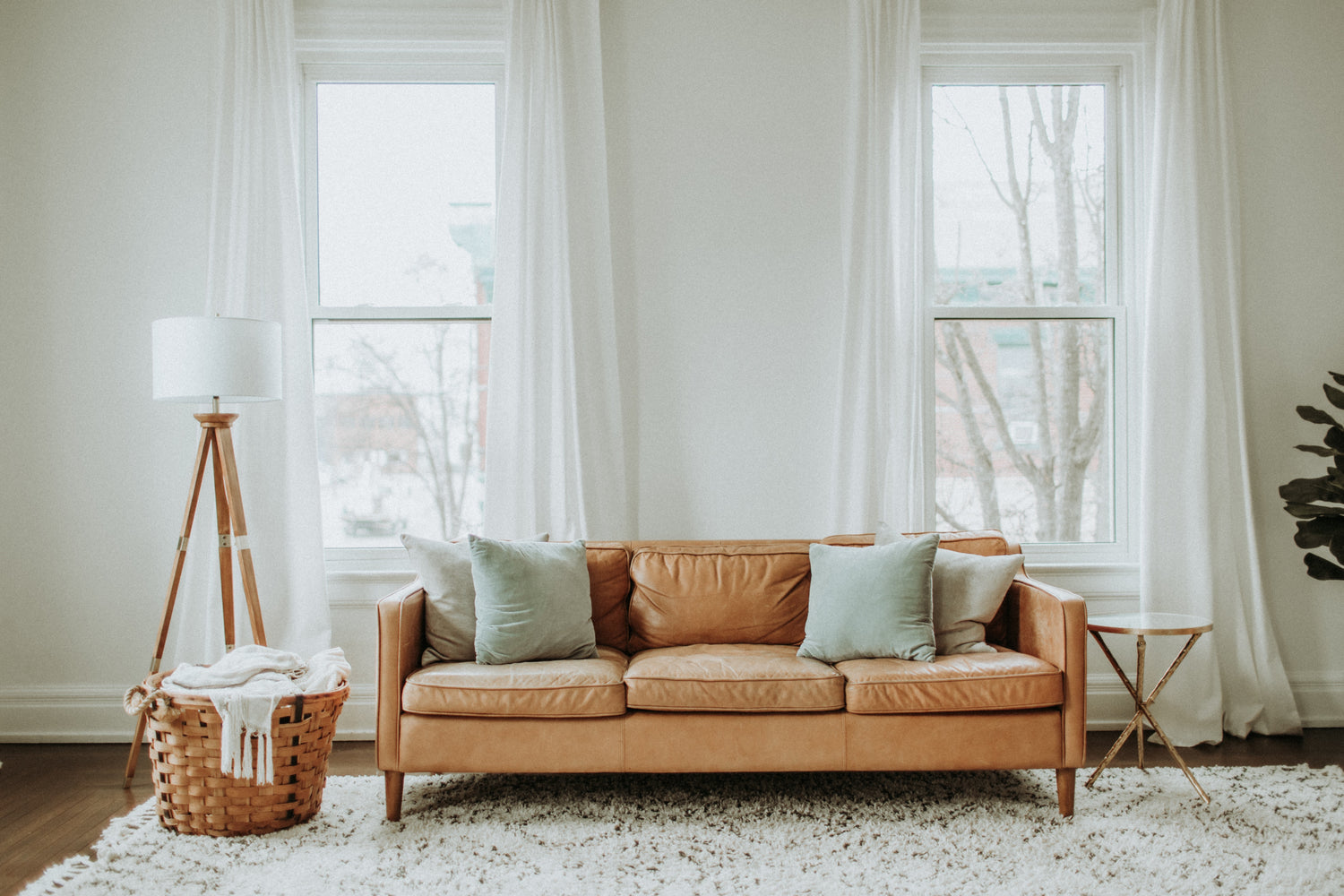
A rug not only transforms your space by adding a touch of elegance and style, but it also provides a feeling of warmth and comfort with every step.

Prepare a cozy living room for autumn without redecorating everything: rugs, lighting, colors, and textures for an inviting space.

Quelle taille de tapis sous une table à manger ? Découvrez la règle des 60 cm, les bons formats selon les places et les erreurs à éviter.

Add character to a rented living room with a rug. Colors, zones, budgets, and reversible tips without making any permanent changes.

A long living room looks more balanced with the right rug. Sizes, placement and dimensions: avoid the hallway effect in your home.